Why AEO/GEO Makes Traditional SEO More Valuable Than Ever Instead?
Yee Sen Low
Founder, Yeeclick Studio
13th August 2026
8 mins read
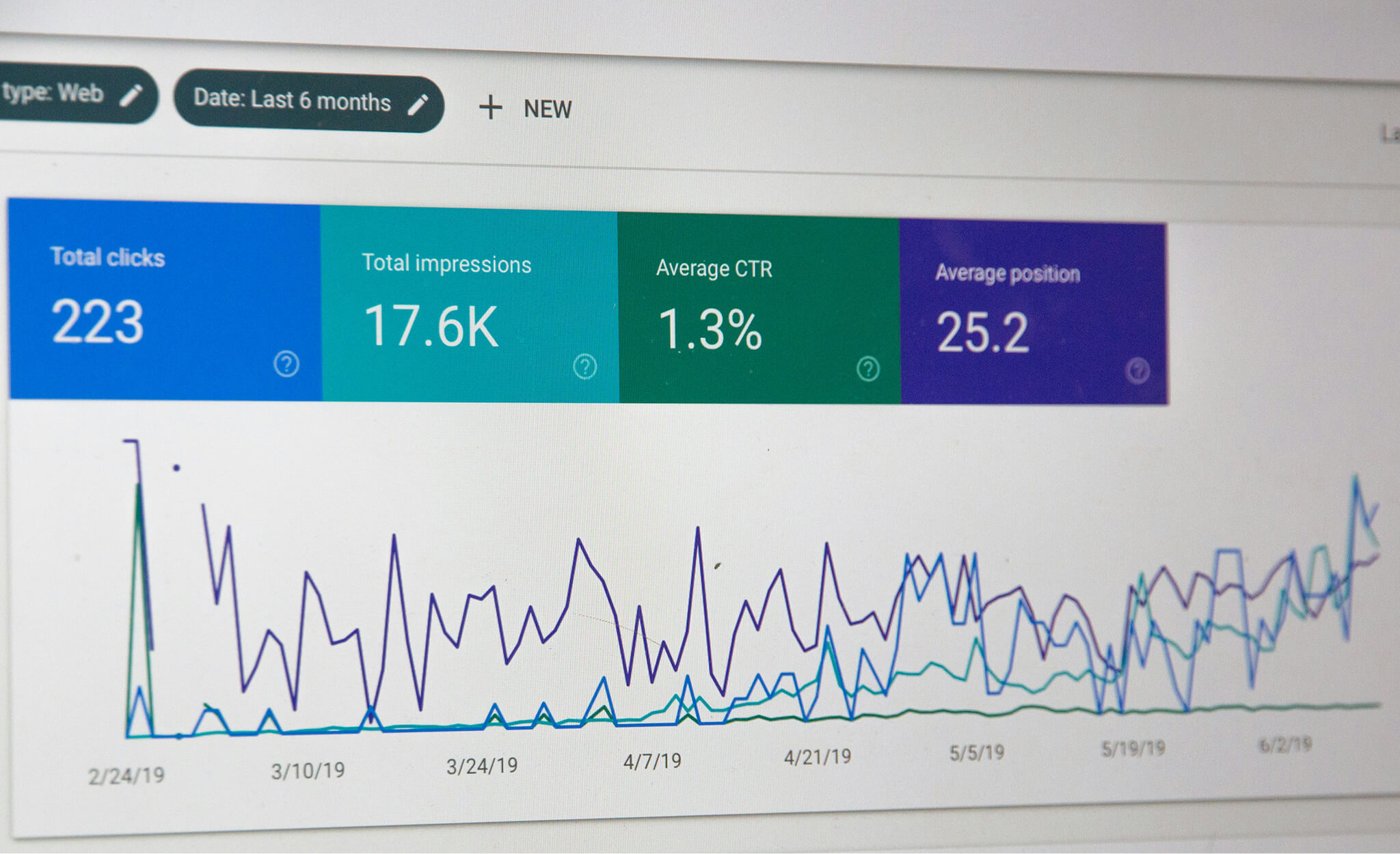
Introduction
"SEO is dead. Long live GEO."
You've seen this kind of headline. Every SEO enthusiast has. This new marketing world's favorite buzzword exists for valid reasons, but it hasn't made traditional SEO less important. If anything, traditional SEO is more valuable than ever. There's a reason I'm writing "traditional" SEO instead of just SEO here.
Google itself has taken official stance on AEO/GEO.
"Good SEO is good GEO, or AEO, AIO, LLM SEO, or LMNOPO."
Danny Sullivan (Google Search Director)
"Optimizing for generative AI search is optimizing for the search experience, and thus still SEO."
Google's official Search Central guidance (May 2026)
So let's clarify something: GEO/AEO is SEO. But that's not where this ends, don’t worry.
The main difference between traditional SEO and GEO/AEO is what you're optimizing for. Traditional SEO focuses on ranking in a list of blue links. GEO/AEO optimizes to win a citation across AI answer surfaces.
Here's a preview of what's ahead:
- Source of traffic
- GEO/AEO builds on top of traditional SEO
- AEO makes SEO not just a "big player's" game anymore (the reason I wrote this article)
Source of traffic
Below is the comparison of traffic acquisition before AI-era (2020-2022 average) and now.
| Acquisition Channel | Similarweb Pre-AI | Similarweb 2026 | Ahrefs Pre-AI | Ahrefs 2026 |
|---|---|---|---|---|
| Organic Search | 46.2% | 45.1% | 51.5% | 30.0% |
| Direct Clicks | 26.8% | 28.3% | 24.3% | 40.1% |
| Paid Ads | 11.1% | 12.4% | 14.8% | 18.2% |
| Social Media | 5.3% | 4.8% | 9.4% | 8.8% |
| AI Assistants | 0.0% | 1.8% | 0.0% | 0.35% |
| Others | 10.6% | 7.6% | 0.0% | 2.55% |
Organic search (30-45%) still makes up the far bigger share of traffic compared to LLM referrals (below 2%).
You might notice traffic drops after AEO/GEO appears. Yes, this is real, and it's due to zero-click search. However, CTR is an absolute value in math, but a relative value in the business world. You and your competitors both drop in CTR together. And if a customer wasn't going to click through any link, they weren't there to make a move in the first place, with or without the LLM.
Take it to the extreme: even if AEO/GEO became 100% of traffic, SEO still wouldn't be going anywhere. Which brings me to the next point.
GEO/AEO builds on top of traditional SEO
AI search engines like Google Gemini or ChatGPT's web search don't browse the entire live internet from scratch every time you type a prompt. Google use a process called Retrieval-Augmented Generation (RAG).
When a query is made, the AI plugs into a search index, Gemini draws on Google's own index, while ChatGPT's web search leans on Bing's, to pull a shortlist of web pages. Not every AI assistant works this way. Some, like Perplexity, run their own independent index instead of relying on Google or Bing at all. But since Gemini and ChatGPT are the two biggest players, that's where I'm focusing here.
Traditional SEO does the vast majority of the heavy lifting just to get your website past that initial gatekeeper filter. If your page isn't well-structured or well-ranked enough to be retrieved in the first place, the AI's retrieval process filters you out completely, before it ever gets a chance to read or evaluate your content.
AEO cracks the big players' monopoly
I get excited writing about this one.
Extending from the previous point: AI assistant engines plug into a search index. The question is how much of that index the AI overview actually pulls from.
Google hasn't shared what percentage of searches trigger an AI overview, but few trackers report AEO is around 50% now.
Over 40% of US searches now trigger AI overview
The 2026 Generative AI Landscape Report (Similarweb)
Around 70% of SERPs have AI Overview
AI Overview Study for 8,000 Keywords in Google Search (Advanced Web Ranking)
How much of the AEO citation pie do top-ranked pages actually get?
Only 38% of pages cited in AI Overviews also rank in the top 10. The rest split almost evenly between positions 11–100 (31.2%) and beyond 100 (31.0%).
Update: 38% of AI Overview Citations Pull From The Top 10 (Ahrefs)
Now, let's check the click-through rate for searches without an AI Overview.
For clicks that don't go through AI overview, page 2 ranked sites get less than a 1% click-through rate
So what can we conclude here? Big brands still capture the larger share, but smaller players who wouldn't normally rank high in organic search actually stand a real chance at a piece of that pie.
Smaller players who haven't ranked high in search actually have a chance to fight for that 60 percent of citations in the AI overview! It is an exaggeration to say smaller brands will have high returns with SEO now, but the conditions are better than before.
And how often do users click through an AI overview?
- Daily AI Overview power users: 50% click-through
- Occasional users: 28% click-through
- Casual/rare users: 14% click-through
This click-through rate is certainly something. These are AEO stats, how about GEO?
The picture looks a little different once you step outside Google's own AI Overviews.
GEO is a lower-traffic source (less than 2%, as mentioned) due to a low citation rate and different search intent when using an AI assistant.
Citation-to-ranking correlation is much weaker here.
Only about 6.8–12% of pages cited by ChatGPT overlap with Google's top 10, and Perplexity barely correlates at all.
Are Citations in AI Search Affected by Google Organic Visibility Changes? (Lily Ray)
That's because they're not scraping from Google directly. This 2% traffic source is something we can work on slightly differently compared to traditional SEO.
Bottom line: the fundamentals stay the same
AI is great for SEOs because it makes users rely on search even more (sounds evil, I know).
Now for my kind side: good content, clear structure, real expertise, genuine usefulness to the reader, these are what's always driven things forward. No matter whether LLMs exist or not, what SEOs need to do never changes.
Meet Yee Sen
Precise, detail-oriented, and intensely passionate.
With total dedication, Yee Sen helps business owners and coaches optimize their systems and scale their revenue.
From building fiber optic network to building funnels, his engineering mindset stays the same: precise, detail oriented, and passionate.
With total dedication, Yee Sen helps business owners and coaches optimize their systems and scale their revenue.
